


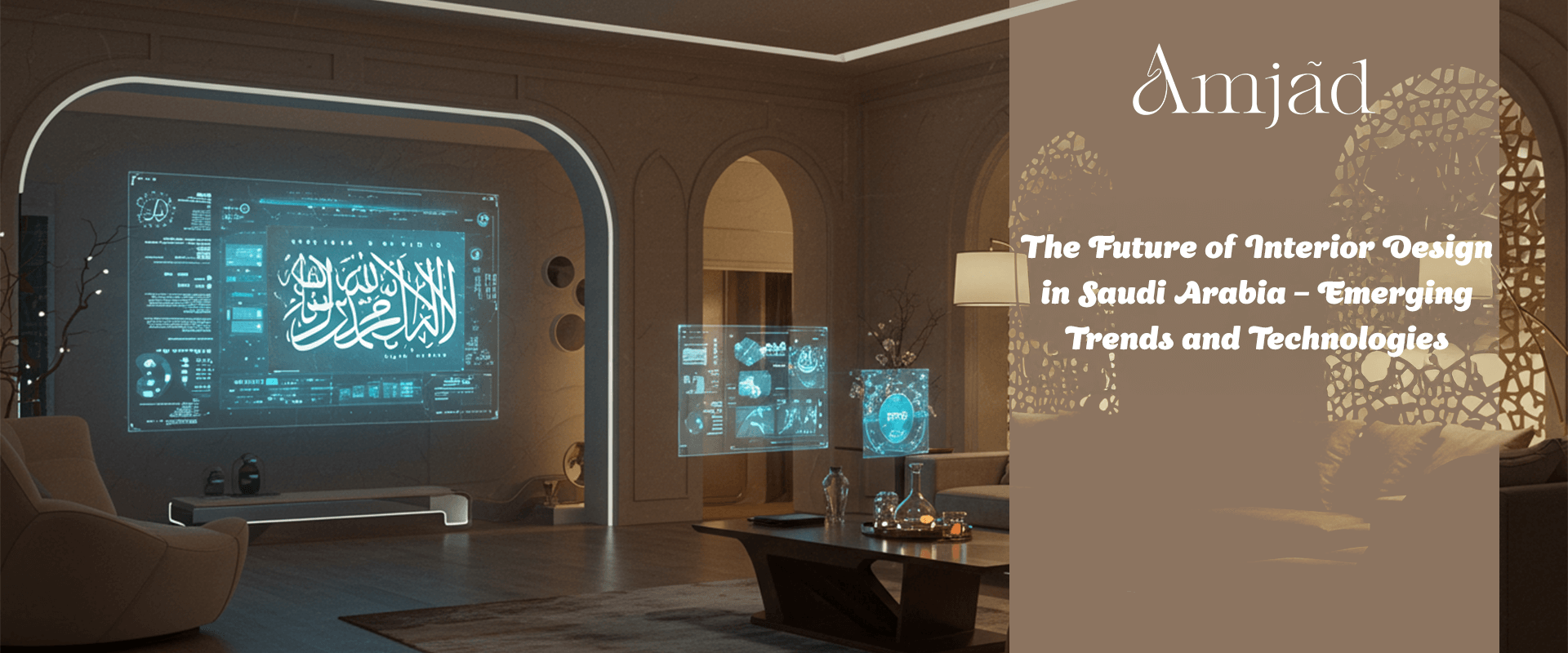
The Future of Interior Design in Saudi Arabia – Emerging Trends and Technologies
In the midst of the cultural and urban renaissance taking place in the Kingdom of Saudi Arabia, interior design emerges as a key pillar in enhancing quality of life and creating living and working environments that meet the aspirations of individuals and society. Interior design is no longer limited to arranging furniture or choosing colors; it has evolved into a comprehensive discipline that intersects with technology, sustainability, and cultural identity.With Saudi Vision 2030, the pace of transformation in this sector has accelerated, shaping a promising future that blends global standards with authentic local spirit, all aimed at elevating the quality of life.
Interior Design as a Reflection of Saudi Identity:
One of the most prominent features of interior design development in Saudi Arabia is the smart fusion of heritage and modernity. Designers are drawing inspiration from Islamic architecture and traditional motifs, reintroducing them in contemporary forms that suit today’s lifestyle.The Najdi style and Hijazi ornaments are now incorporated into villas, offices, and retail spaces, but with a fresh approach that uses natural materials and earthy tones balanced with modern touches such as smart lighting and premium finishes.
Technology Leading the Future of Interior Design:
Interior design has moved beyond pure aesthetics; cutting-edge technologies are now driving a paradigm shift in planning and execution. Among the most notable innovations:
- Virtual Reality (VR) and Augmented Reality (AR): Allow clients to experience designs before implementation.
- Smart Home Systems: Integration of interior design with intelligent lighting, HVAC, and audio solutions.
- Interactive Design: Use of smart screens and adaptive walls to create dynamic spaces.
- 3D Modeling Software: Enabling designers and clients to visualize every detail prior to execution.
These tools not only simplify the design process but also enhance accuracy, minimize waste, and save time
Sustainable Interior Design: A Priority in the New Saudi Arabia:
Aligned with global environmental goals, sustainability has become a central element of interior design in the Kingdom. Designers and developers are adopting eco-friendly practices, focusing on energy efficiency, and maximizing the use of natural light and ventilation.
Key sustainable practices include:
- Using recycled or locally sourced natural materials such as wood and marble.
- Designing spaces to make optimal use of daylight.
- Implementing smart systems that reduce electricity and water consumption.
- Creating interiors that minimize the building’s carbon footprint.
This shift aligns with Saudi Arabia’s commitment to environmental responsibility and represents a strategic direction for both real estate and interior sectors
Mega Projects Driving Interior Design Evolution:
Saudi Arabia is home to unprecedented mega-projects that are redefining urban planning and interior design worldwide, including:
- NEOM
- The Line
- Qiddiya
- The Red Sea Project
- Diriyah Gate
These projects not only open new horizons in city development but also set global benchmarks for smart, sustainable, and tech-driven interior design. They also provide unique opportunities for both local and international designers to deliver innovative solutions that meet the ambitions of these transformative developments.
Among the leading contributors to this landscape is Amjad Arabia, a trusted source for sustainable and modern design solutions. Offering comprehensive services—including electromechanical contracting and commercial exhibition design—Amjad Arabia combines global trends with authentic Saudi aesthetics, positioning itself as an ideal partner for those seeking excellence in residential and commercial interior design.
The Future of Interior Design in Saudi Arabia: What’s Next?
The future of interior design in Saudi Arabia is heading toward a new era of maturity and innovation, fueled by Vision 2030, which continues to reshape the Kingdom’s urban and lifestyle landscape. Interior design is no longer viewed as a mere aesthetic choice but as a strategic component in building smart cities, enhancing quality of life, and achieving environmental and economic sustainability.
Key trends shaping the next stage include:
- Integration of technology and function: Homes and offices will become part of intelligent ecosystems that adapt to user needs.
- Data-driven design: Leveraging AI and behavioral analytics to tailor designs to individual lifestyles.
- Cultural authenticity: Creating modern designs inspired by Saudi heritage yet appealing to global tastes.
- Sustainability at the core: Using natural materials and energy-saving technologies to ensure environmentally conscious spaces.
With the rapid progress of mega-projects like NEOM and The Line, alongside booming real estate investments, opportunities for interior designers in Saudi Arabia—both local and international—are expanding like never before. Interior design is set to become a pivotal tool in building integrated, flexible, and attractive living and working environments for generations to com